Loopbio, Another Couple of Years
The previous post covered 2017 to 2019. This one covers 2020 and 2021. The 2020 summary went on the company blog at the time, so the personal series skipped it.
Most of the work over these two years happened remotely. Loopy runs in a browser, so the shift to working from home did not change how people used it. By the end of 2020 around six hundred scientists had processed roughly a hundred thousand videos, about 58 TB, through it, much of it tracked, annotated or scored from home. To handle the load we added more machines and GPUs to the Loopy cloud so that tracking, analysis and deep learning could run without queuing.
We built a virtual reality system for freely walking locusts for the collective behaviour group in Konstanz. It projects a perspective-correct world around the animal as it walks, the same method we had used for flies, fish and mice. It was used to study how individual locusts respond to the motion of others, which bears on how swarms form, and it appeared in several television documentaries about the 2020 locust outbreaks in east Africa and Asia.
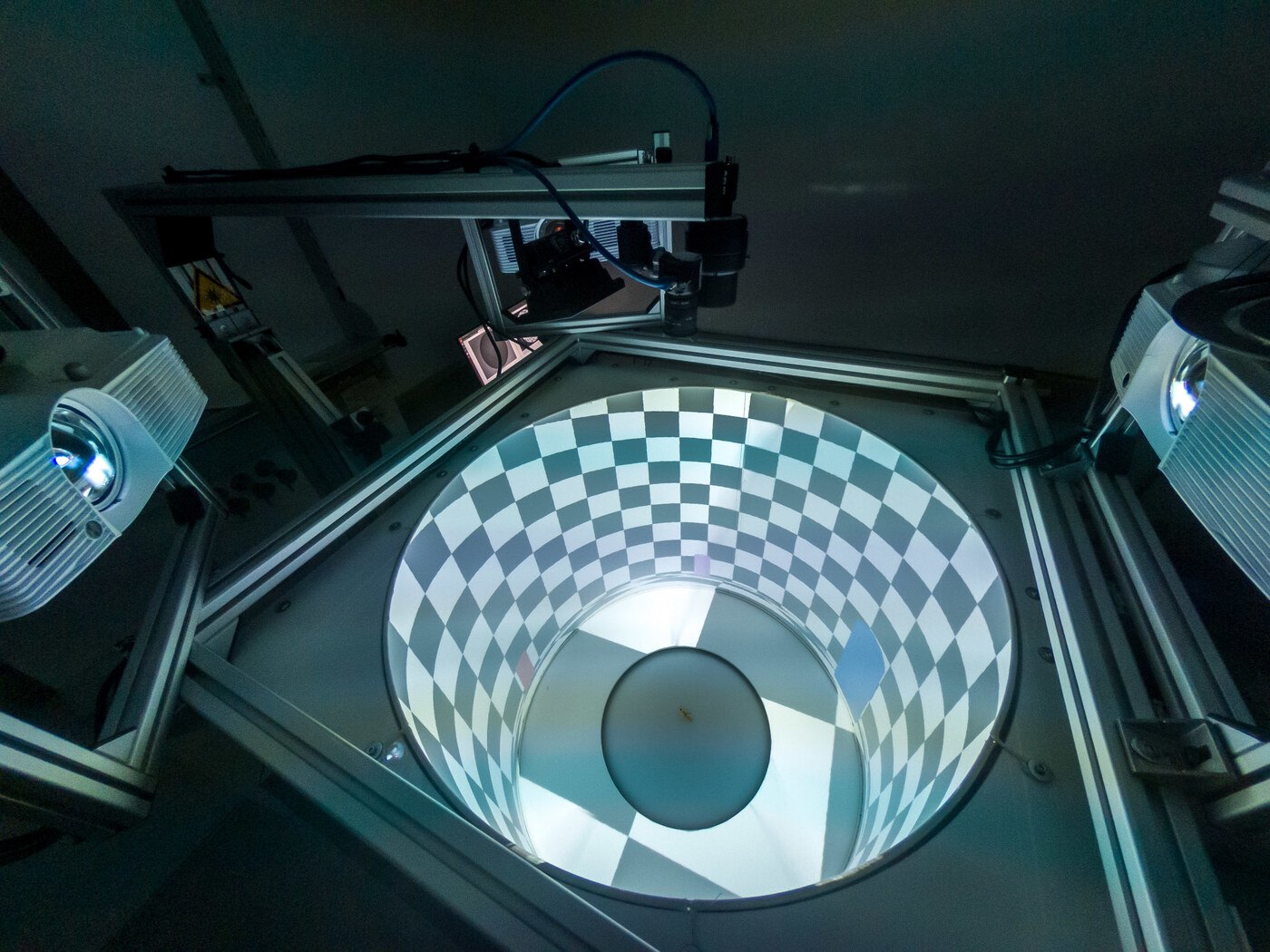
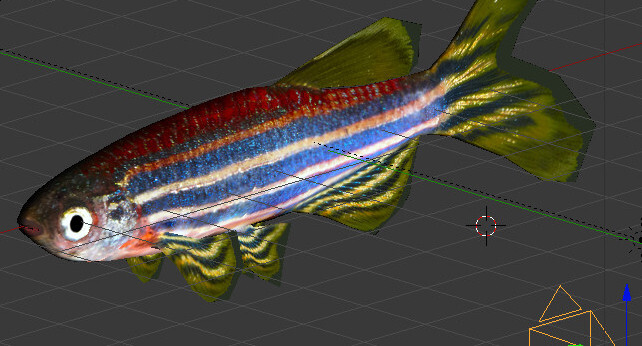
The fish VR systems stayed in use for collective behaviour work, with a real fish and a rendered one sharing a tank.
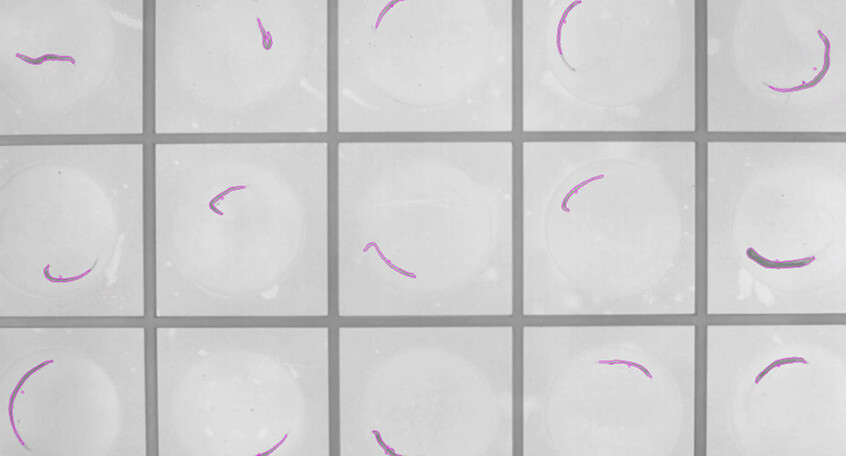
Loopy and Motif were used across a wide range of animals. Kristin Tessmar-Raible’s group published repeatedly through 2021 on how the marine bristle worm Platynereis detects moonlight and daylight through non-visual photoreceptors, running the assays in Kastl and tracking and scoring them in Loopy.
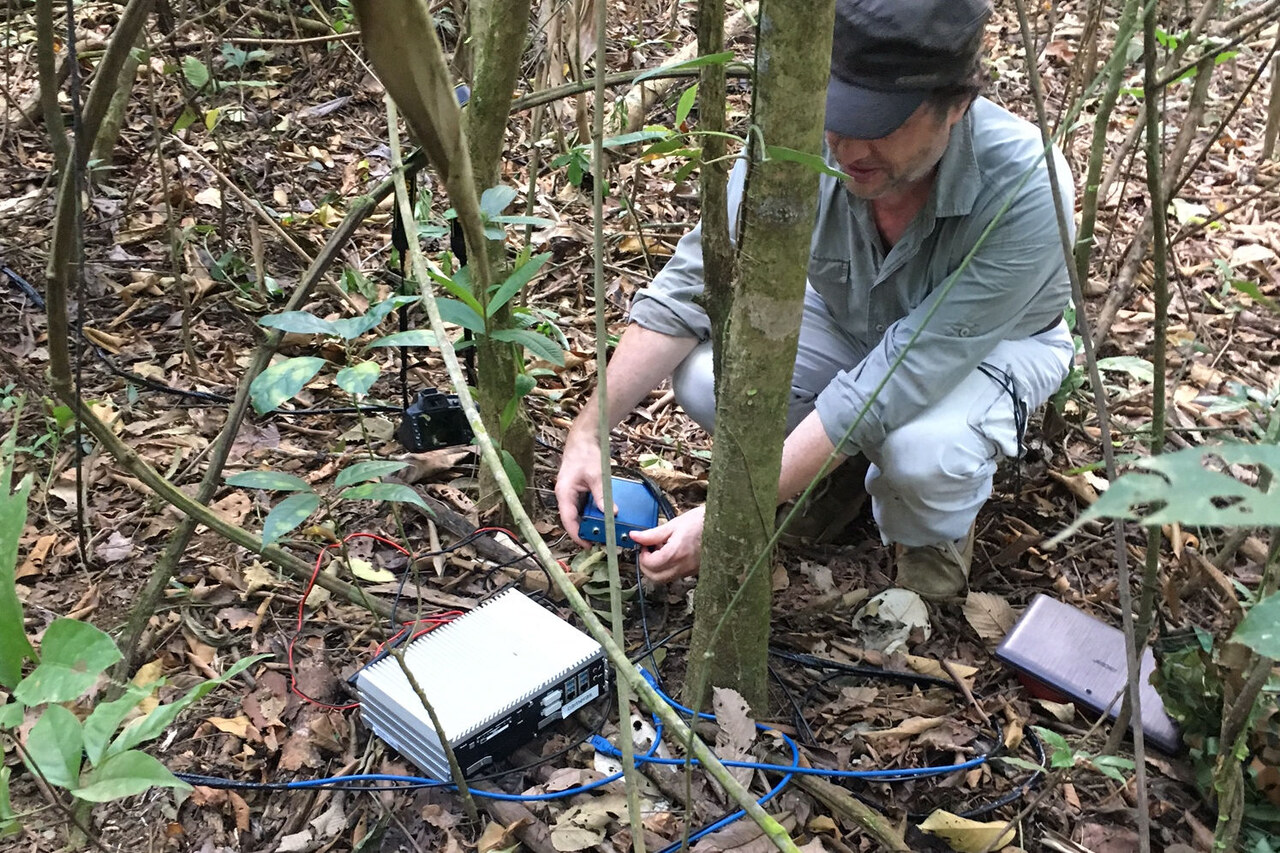
Another group recorded golden-collared manakins in 3D in the forest in Panama , running Motif on a field setup that uploaded over a mobile connection, and modelled the male’s courtship jump as a ballistic trajectory.
A dove group used Motif and Loopy to work out which parts of a ring dove’s multimodal courtship display predict the female’s response. Loopy was also used to measure how visual noise changes shoaling decisions in sticklebacks, to quantify pain in horses from posture and behaviour in a veterinary clinic, and to track the skeletons of myriapods with deep learning.
We added several features to Loopy over the two years, all free to existing users. It can now search a group’s video library by tag, label and project; generate audio spectrograms so behaviour with an acoustic component can be scored against the video; and run markerless pose tracking with deep learning. We rewrote the behaviour-coding tool and added an API, so data can be pulled into python or R for further analysis. On-site installations let a whole department share one recording, tracking and analysis system. We also published an Imaging Encyclopedia covering how to choose cameras, lenses and lighting for scientific video, including why most scientific imaging, like the cameras on the Perseverance Mars rover, uses monochrome sensors.
On the hardware side we extended the Motif and Kastl ranges: more camera and lens options, multi-camera synchronised systems for 3D, and a Kastl configuration for high-throughput behaviour with optional optogenetics and climate control. Conferences moved online over both years, so we ran virtual booths and sponsored online symposia, including those of the German Neuroscience Society and a student symposium on animal behaviour.