johnstowers.co.nz ~ / blog / 2019/12/20 / loopbio-2017-2019

Three More Years at Loopbio

It has been quiet here for a while, and that is mostly my fault. The year-in-review habit I started with Year One at Loopbio migrated, sensibly, onto the company blog, where it belongs, and this personal page got left to gather dust while we got on with the work. So consider this me catching up with old friends. When I last wrote here, I had concluded that the way you arrange for the apparatus not to be the scientist’s hard part is by making it our hard part, in perpetuity, with a soldering iron. Three years on - 2017, 2018, 2019 having gone past with the particular speed that only happens when you are busy - I can tell you what that hard part actually turned into. It turned into two things people buy.

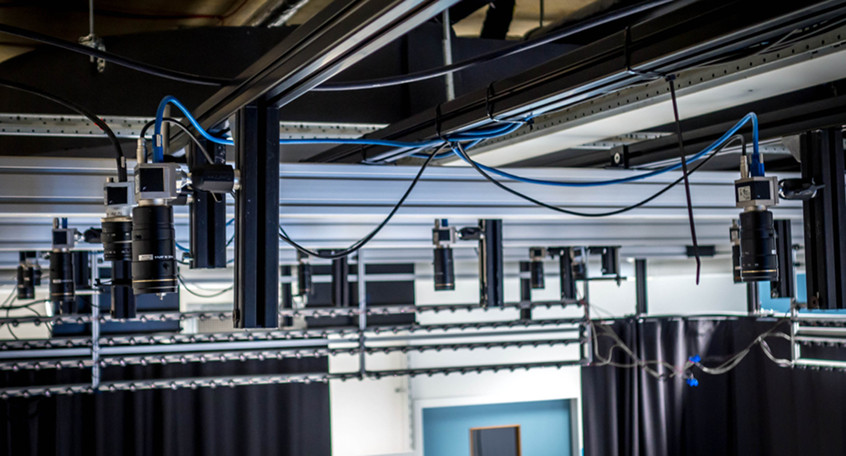
The recording side, Motif , grew up into the workhorse - the boring, reliable thing you stop noticing, which is the highest compliment hardware can earn. One customer’s machine recorded for something north of two hundred days without falling over, which in my experience is roughly two hundred days longer than most software manages, ours included. Around that we built the multi-camera, high-megapixel rigs the harder questions demand, and in 2019 shipped Motif 5, which is the version I would have wanted from the start: real-time closed-loop processing rather than just dutiful recording; sensor and DAQ I/O so that your EEG, your audio, your optogenetic stimulation and your video all land in one synchronised file rather than four hopeful ones you reconcile by hand at midnight; outputs it can drive rather than only read; Windows support for the people who quite reasonably did not want to learn Linux to run a camera; and support for upward of five hundred cameras, which is a sentence that still slightly alarms me.

A multi-camera Motif recording system

The other is Loopy , which we launched in 2018 and which does in a browser the thing scientists used to do with a folder of scripts and a prayer: organise the video, code and score the behaviour, and track the animals, the last of these now with deep-learning assistance. I will spare you the hype I am constitutionally allergic to and just say it works, and that in 2019 its use more than doubled, to the point where whole departments stopped asking whether to move over and simply did, which is the most flattering thing a department can do. You can take it for a free spin if you like.

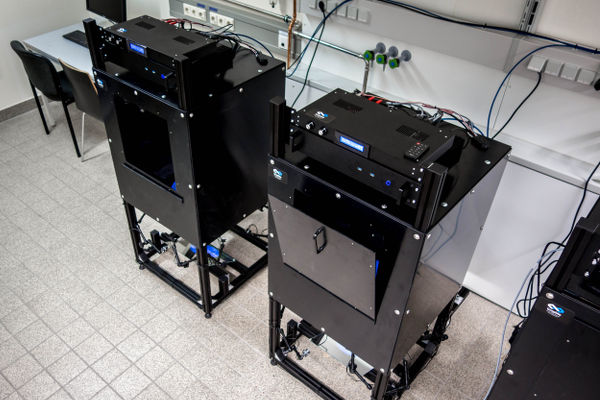
But the spine of these three years, the thing I am happiest to have my name on, is the science. In 2017 our paper Virtual reality for freely moving animals came out in Nature Methods, with me as first author and a great many cleverer people after me. It tracks a freely moving animal and redraws a perspective-correct world around it fast enough that the animal believes it, and we made it work for animals as unalike as flies, fish and mice; we open-sourced the engine as FreemoVR , which I wrote about at length here at the time. The fish version became real hardware: the FishVR rigs now running in Iain Couzin’s lab, where a real fish and a photorealistic virtual one share a single tank and, as far as the real fish is concerned, a single reality. That a fish takes a rendered neighbour seriously enough to school with it is still, three years later, the kind of result I find quietly astonishing.

A loopbio FishVR virtual-reality system

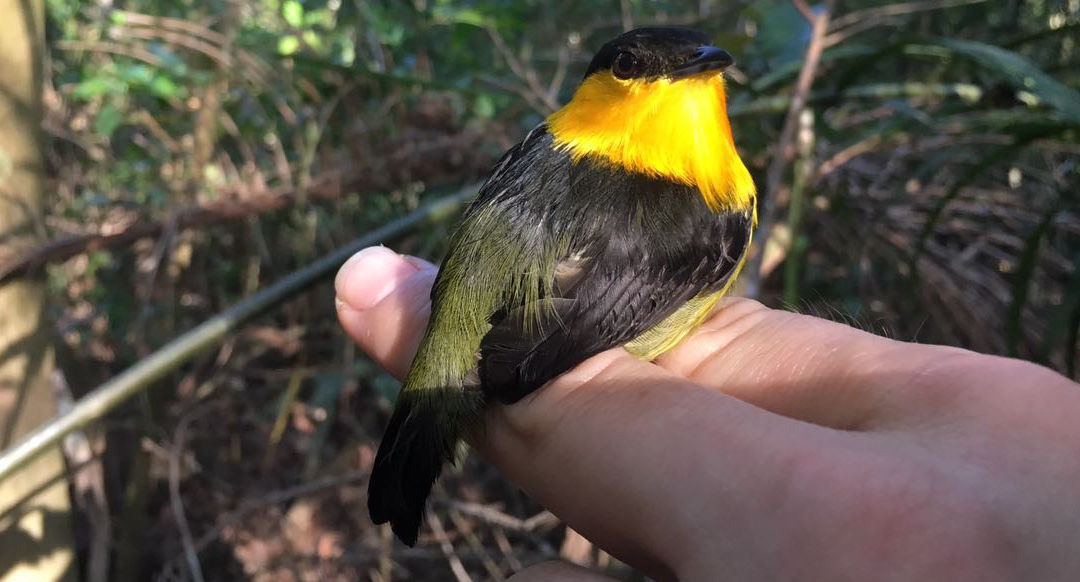
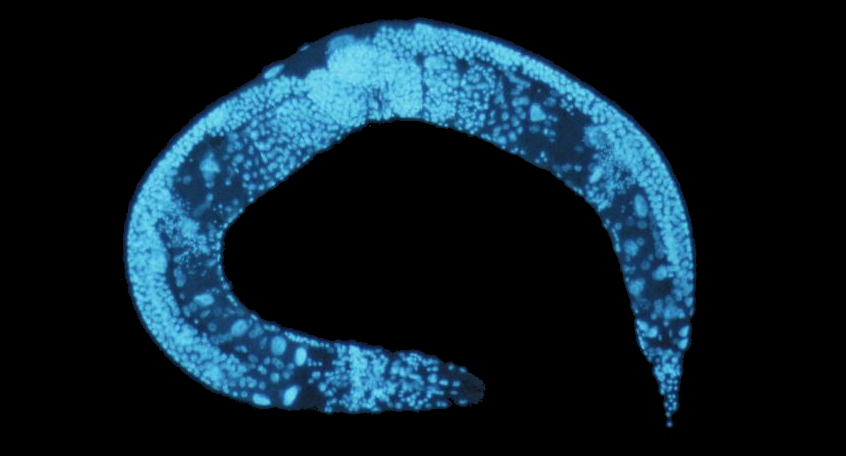
And here is where the original thesis finally got tested, because if the apparatus is genuinely meant to disappear, it has to disappear for everyone, not just for the animal we happened to start with. So: deep-learning pose estimation, in the DeepPoseKit work out of the Couzin lab (eLife, 2019), where I am pleased to report the deep learning is a tool that earns its keep rather than a press release. The neurons behind Drosophila courtship song, in the Murthy lab (Current Biology, 2019). A marine worm, Platynereis, and its stubborn circadian rhythm, in Kristin Tessmar-Raible’s group. Bees photographed inside a hive; manakins recorded out in the field, where the apparatus has to survive weather and indifference; wolves; C. elegans in camera arrays where the apparatus is essentially copied-and-pasted because one worm, like one synchronisation board, is never enough; and - my favourite line item in any invoice we have ever issued - an artist’s “arachnid orchestra” of spiders. The same infrastructure, soldered once, carrying flies and fish and worms and birds and spiders. When I argued, years ago, that the right thing to build was general infrastructure rather than one clever apparatus, this is the evidence I did not have. The breadth is the whole argument; the range, it turns out, is the point.

A manakin, during field recording

C. elegans, imaged in a camera array

We have also, slowly, learned to leave the workshop. Goettingen again, ASAB in Konstanz, and our first-ever booth at SfN in Chicago, comfortably our biggest yet and by some distance the biggest hall I have stood wearily in. We moved into a proper office in central Vienna, on Lange Gasse, which after years of building rigs around our knees feels suspiciously like a real company. And we partnered with Traverse Science to carry Loopy into the North American pre-clinical and large-animal world, somewhere a Vienna two-hander was never going to reach alone.

So here is the honest reflection, the one Year One was too early to write. Three years in, this is a genuine company, with genuine products and several hundred genuine scientists using them, and the daily hard has migrated from soldering to support, scale and the small terror of shipping software people depend on. It is still, unmistakably, the right kind of hard. The promise buried in Another Change - that this technology would actually reach working scientists - has, without any single dramatic moment, quietly come true. The soldering iron is still warm, but it now has a lot of company.

Five hundred cameras, two hundred uncrashed days, one new office with a doorbell that mostly works: apparently I am still an entrepreneur, a sentence I have finally stopped being surprised to write.